
-
Le Petit Courselle Les Copines White Vin de France
Regular price €17.75Regular priceUnit price per -
Les Truffières Chardonnay Vin de France
Regular price €27.00Regular priceUnit price per -
Domaine Émilian Gillet 'Quintaine' Viré Clessé AOC France
Regular price €37.75Regular priceUnit price per -
Kamara Pure 'Shadow Play' Assyrtiko Thessaloniki PGI Greece
Regular price €28.75Regular priceUnit price per -
Ollier Taillefer Allegro Faugeres AOC France
Regular price €24.50Regular priceUnit price per -
Saumaize-Michelin 'Pentacrine' Pouilly-Fuissé AOC France
Regular price €40.50Regular priceUnit price per -
Paddy Borthwick Riesling Wairarapa GI New Zealand
Regular price €19.75Regular priceUnit price per -
Domaine Christian Moreau 'Les Clos' Chablis Grand Cru AOC France
Regular price €86.95Regular priceUnit price per -
Steininger Riesling Sekt Reserve Kamptal DAC Austria
Regular price €42.00Regular priceUnit price per -
Baronne Le Grenache Gris de Jean Blanc France
Regular price €24.00Regular priceUnit price per€28.25Sale price €24.00Sale -
Domaine de la Bongran Jean Thevenet Viré-Clessé AOC France
Regular price €48.25Regular priceUnit price per -
- Organic
- Biodynamic

Bret Brothers La Soufrandière - `Le Clos de Grand Père Macon Vinzelles AOC France
Regular price €44.50Regular priceUnit price per -
La Sapata Aligoté Romania
Regular price €19.00Regular priceUnit price per -
Domaine Langoureau 'Les Houillieres' Chassagne-Montrachet AOC France
Regular price €75.00Regular priceUnit price per -
Vilain P'tit Ch'nin Anjou AOC France
Regular price €29.00Regular priceUnit price per -
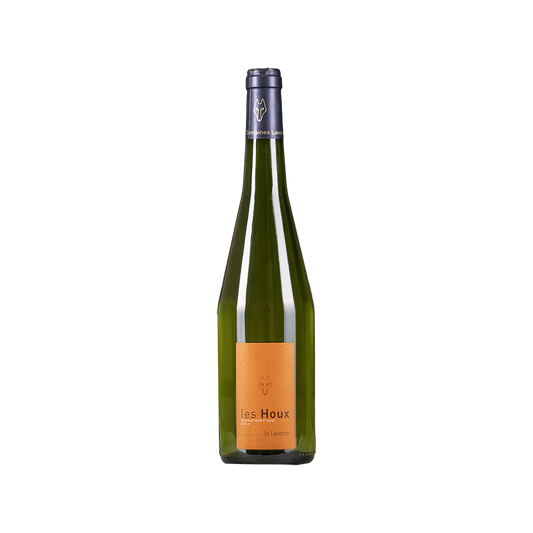
Domaines Landron `Les Houx` Muscadet AOP France
Regular price €26.25Regular priceUnit price per


White wine is made from the juice of green or yellow grapes, and sometimes red grapes, with the skins removed before fermentation. That is what keeps the colour pale and the flavours clean and crisp. The style ranges from crisp, refreshing sippers to complex, age-worthy bottles that rival the finest reds. At one end are bone-dry, mineral Chablis and steely Muscadet. At the other are rich, creamy, oak-fermented white Burgundy and full-bodied Alsace Vendange Tardive. In between lies an extraordinary spectrum: the zesty citrus and cut grass of New Zealand Sauvignon Blanc, light and easy-drinking Pinot Grigio, Chardonnay from lean and mineral to rich and buttery, Riesling from bone-dry to lusciously sweet with honeyed complexity as it matures, the floral intensity of Condrieu Viognier, and the texture and depth of aged white Rioja. White wines are the natural partner for seafood, shellfish, fish, lighter meats, vegetables and soft cheeses.
At Wines Direct we source white wine from the world's finest producers in Burgundy, Alsace, the Loire, the Rhône, Germany, Austria, Italy, Spain, Portugal and the Southern Hemisphere. We always prioritise wines that reflect their origins and reward attention.