

J. Charpentier Brut Réserve Champagne AOC France
€56.00
You're €90.0 away from free shipping!
World Champagne Day
By Gavin Keogh, co-owner of Wines Direct
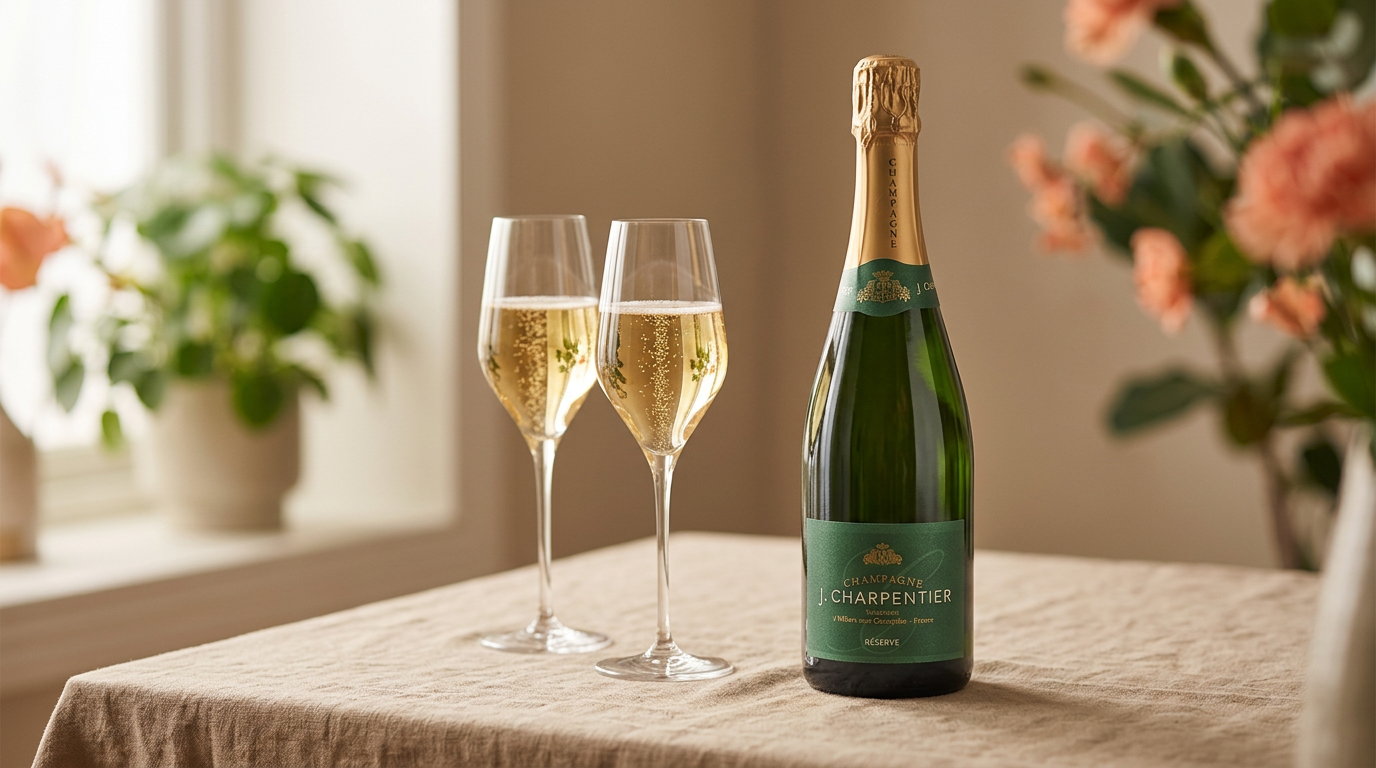
This Friday, 23 October, is International Champagne Day. It lands on the fourth Friday of October every year, and the Champagne region has been marking it since 2009. This year it also happens to be the Friday before the October bank holiday weekend, which feels like a reasonable excuse to open something good.
Champagne is one of the most recognised wine names in the world, and one of the least understood. Most of us know it from weddings, christenings and the stroke of midnight on New Year's Eve, but far fewer people could tell you what separates a Brut from an Extra Brut, why a Blanc de Blancs tastes so different from a Rosé, or why the bottle costs what it does. So rather than a list of reasons to celebrate, here's a proper look at what's going on inside the bottle.
Quick facts
Champagne is a region in northeast France, roughly 150 km from Paris, centred on the towns of Reims and Épernay. Only sparkling wine made there, from grapes grown there, under the region's rules, can carry the name. Everything else, however well made, is sparkling wine.
Two things shape the region more than anything else: cold and chalk.
Champagne sits close to the northern limit of where grapes will reliably ripen, so the fruit comes in with high natural acidity and modest sugar. That acidity is the backbone of every good Champagne.
Underneath the vines, deep beds of chalk hold water through dry spells, drain well in wet ones, and give the wines a fine, almost mineral edge.
The same chalk was quarried out centuries ago, leaving miles of cool underground cellars where the bottles now age.
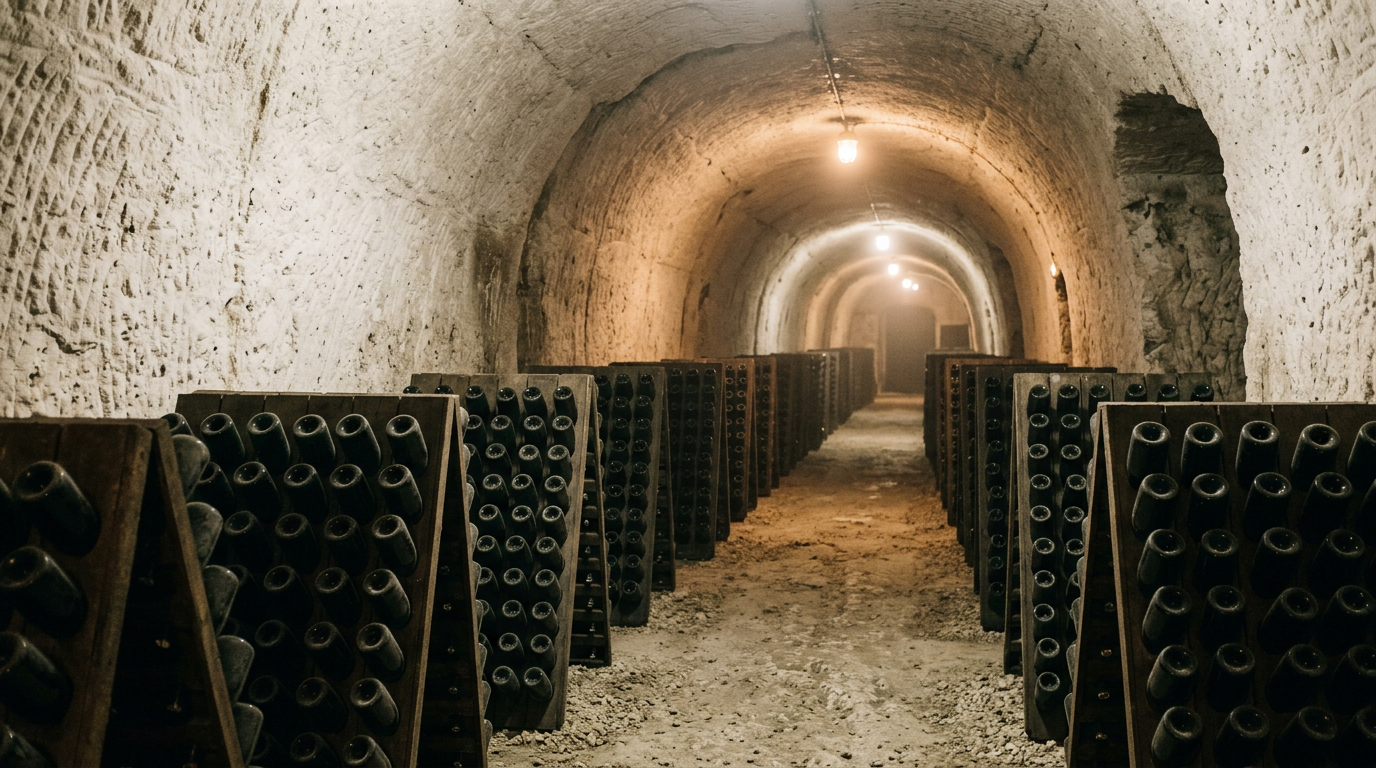
Seven grape varieties are permitted in Champagne, but three do almost all the work.
Brings freshness, citrus, white flowers and finesse. It's the grape behind Blanc de Blancs and ages beautifully.
A red grape pressed gently so the juice stays white. It adds body, structure and red-fruit depth.
The one that rarely gets the credit. It ripens reliably in colder, frost-prone spots and gives soft, round, fruity wines that are generous young. For a long time it was treated as a workhorse grape, but in the Vallée de la Marne, where it dominates, growers have been showing for years what it can do on its own terms.
 Taste it: Meunier-led, from the Vallée de la Marne
J. Charpentier Brut Réserve Champagne AOC France
€56.00
Most Champagnes are a blend of all three, and the blend is where a house's style is decided.
The traditional method
Champagne is made by what's called the traditional method, and the key point is simple: the bubbles are created inside the bottle you eventually open.
Grapes are hand-harvested (machine harvesting isn't allowed), pressed gently and fermented into a still, sharp, high-acid wine.
The winemaker blends wines from different grapes, villages and often previous years, building a consistent house style. Older "reserve" wines kept back from earlier harvests add depth and roundness.
The blend is bottled with a little yeast and sugar and sealed with a crown cap. The yeast ferments the sugar, and because the carbon dioxide can't escape, it dissolves into the wine. That's your fizz, at roughly five to six times normal atmospheric pressure.
5–6× atmospheric pressure in every bottle
When the yeast has done its job, it dies and settles in the bottle. The wine then rests on these spent yeast cells, known as lees, for months or years. This is where the bread, brioche and toasted notes come from. Non-vintage Champagne must spend at least 15 months in the cellar before release; vintage Champagne at least three years. Good producers often go well beyond that.
15 months
Minimum for non-vintage
3 years
Minimum for vintage
The bottles are gradually tilted neck-down so the sediment collects in the neck. The neck is frozen, the cap is removed, and the pressure pushes out a plug of frozen sediment.
A small top-up of wine and sugar is added before the cork goes in. How much sugar goes in here decides whether the Champagne is labelled Brut, Extra Brut and so on.
Why it costs what it does
It's slow, labour-intensive and ties up stock in the cellar for years. That, along with some of the most expensive vineyard land in the world, is a large part of why Champagne costs what it does.
Decoding the bottle
A few words on the label tell you most of what you need to know.
A blend of several harvests, made to taste consistent year after year. This is the house's signature wine and the majority of what's sold.
Try: Charpentier Brut RéserveMade only from a single year's harvest, and only in years the producer thinks are good enough. Richer, more complex and built to age.
Try: Charpentier Millésime 2019“White from whites”
100% Chardonnay. Precise, fresh, citrus-driven.
Try: Charpentier Blanc de Blancs“White from blacks”
Made only from Pinot Noir and/or Meunier. Fuller and fruitier.
Champagne is one of very few places in Europe allowed to make rosé by blending a little red wine into white. Some producers instead allow brief skin contact to pick up colour.
Try: Charpentier Brut Prestige RoséDriven by the dosage, from driest to sweetest:
You'll also see small letters in the fine print.
A grower making wine from their own grapes.
A house that buys some or all of its grapes.
Neither is automatically better, but it tells you something about who's behind the bottle.
Our grower
When most people picture Champagne, they picture the grand houses of Reims and Épernay, and some of those make superb wine. But Champagne is also home to thousands of families farming small plots and making wine under their own names.
The Champagne we've chosen to work with comes from one of those families. J. Charpentier is based in Villers-sous-Châtillon, a village in the Vallée de la Marne, west of Épernay and well away from the big brand houses. This is Meunier country, and the family grows its own grapes, so the wines carry the character of that valley: generous fruit, fine bubbles and a clean, dry finish.
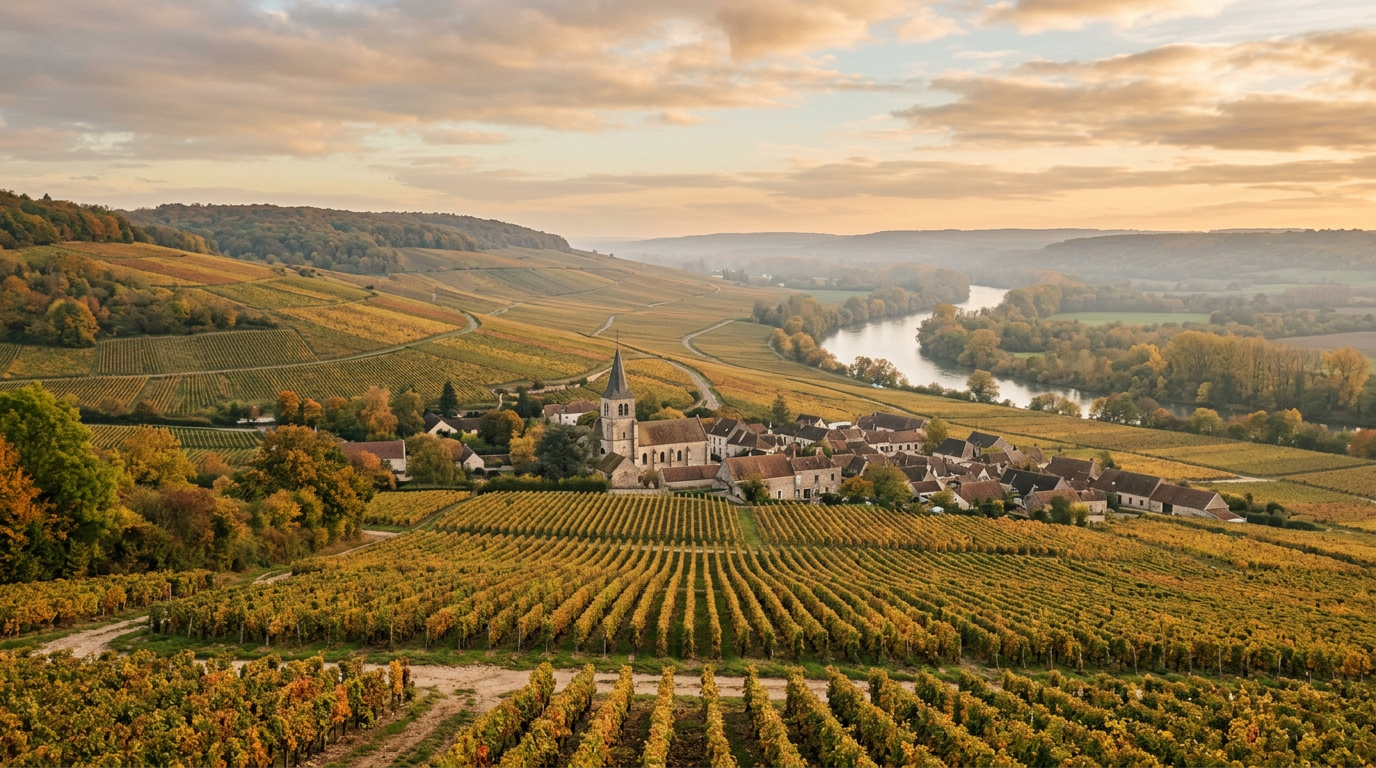
Wines Direct is the exclusive Irish importer of J. Charpentier Champagne, and the range is available in our shops in Mullingar and Athlone and online.
Their range is a useful way to see everything above in practice:

Non-vintage house blend
The house blend of Meunier, Pinot Noir and Chardonnay. Brioche and fresh apple, creamy and properly dry. Also available as a half bottle (handy for two) and a magnum (which ages more slowly and arguably tastes better).

More Chardonnay
A greater share of Chardonnay deepens the toasty, buttery side without losing freshness.


Rosé
Salmon-pink from brief skin contact, with red fruit, honeyed apple and toasted nuts.

Vintage
The vintage wine, made only in strong years. Hazelnut, brioche, ripe orchard fruit and real length.
Try them side by side
Tasting the Brut Réserve beside the Blanc de Blancs is the quickest way we know to understand what Meunier and Pinot Noir actually add to a blend.
At home
Around 8–10°C for non-vintage, a degree or two warmer for vintage so the complexity can show. Three hours in the fridge, or 20–30 minutes in a bucket of half ice, half water. Too cold and you'll taste nothing but bubbles.
8–10°C
Non-vintage
+1–2°C
Vintage
The narrow flute keeps bubbles lively but traps the aroma. Most winemakers now prefer a tulip-shaped glass or a standard white wine glass. The wide, shallow coupe looks great and loses its fizz fast.
Point the bottle away from people, keep a thumb on the cork, and turn the bottle rather than the cork, holding it at about 45 degrees. You're aiming for a quiet sigh, not a pop. A pop means lost bubbles.
A proper Champagne stopper will hold it for a day or two. The silver spoon in the neck is a myth; it doesn't help.
Food pairing
Champagne's acidity and bubbles make it one of the most food-friendly wines there is. It cuts through salt, fat and crunch, which opens up a lot more than canapés.
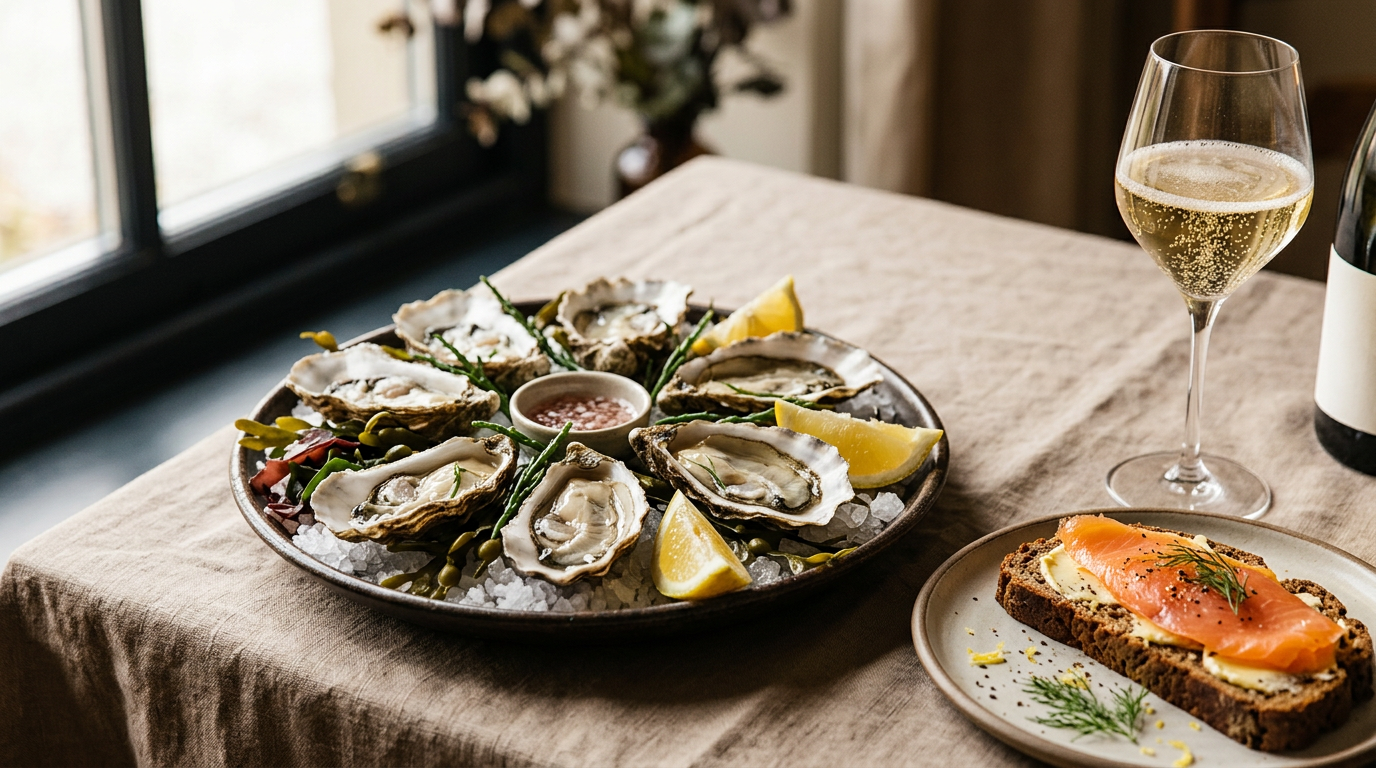
Oysters are the classic, and Irish rock oysters from Galway Bay or Carlingford with a Blanc de Blancs are hard to beat.
Pair with: Charpentier Blanc de BlancsSmoked salmon on brown bread with a Brut.
Pair with: Brut RéserveSalt, batter and a glass of Brut is one of the great pairings. Crisps and popcorn work for the same reason.
Pair with: Brut RéserveWith a vintage Champagne, whose richer, nutty side holds its own against the meat.
Pair with: Millésime 2019With a Rosé. Red-fruit character and a little more structure carry it.
Pair with: Brut Prestige RoséA mature Irish cheddar or a Coolea alongside a vintage wine brings out the nutty notes in both.
Pair with: Millésime 2019Beyond Champagne
The traditional method is used across the world, and some of it predates Champagne's fame. In Limoux, in southern France, monks were making sparkling wine in the 1500s, and the local Blanquette de Limoux, made largely from the Mauzac grape, still carries that history. Cava from Spain uses the same method with local grapes, as do French Crémants and many English and Tasmanian sparkling wines.
Prosecco is a different thing altogether: the second fermentation happens in a large pressurised tank rather than the bottle, giving fresher, fruitier, lighter wines with less of the bready complexity. Neither approach is better. They're simply made for different moments.
Second fermentation in the bottle. Bready, toasty complexity from time on the lees.
Second fermentation in a large pressurised tank. Fresher, fruitier and lighter.
Blanquette de Limoux

€32.50
Cava

€29.00
Crémant

€32.50
Prosecco

€18.00
FAQ
The fourth Friday of October each year. In 2026 it's Friday 23 October.
Non-vintage is released ready to drink and is best within two to three years of purchase. Vintage Champagne can develop for a decade or more if stored well.
For a few weeks, upright is fine. For longer, lie it down somewhere cool, dark and steady.
Not necessarily. You're often paying for marketing and a famous label. Grower and family Champagnes regularly offer more character for the money.
Same method, different region and rules. Crémant comes from other French regions such as Alsace, Burgundy and the Loire, and usually spends less time on the lees.
It's a historical quirk. When the terms were set, Champagne was far sweeter than today, so "Extra Dry" was dry by comparison. The names stuck.
What's the Champagne moment you remember best: a wedding, a result, a quiet Friday that didn't need a reason?
And if there's something about Champagne or the wine world you've always wondered about, ask us in store, online or in the comments. We'll answer it, and the best questions may end up in a future post.
Shop the article
[title]
[message]
