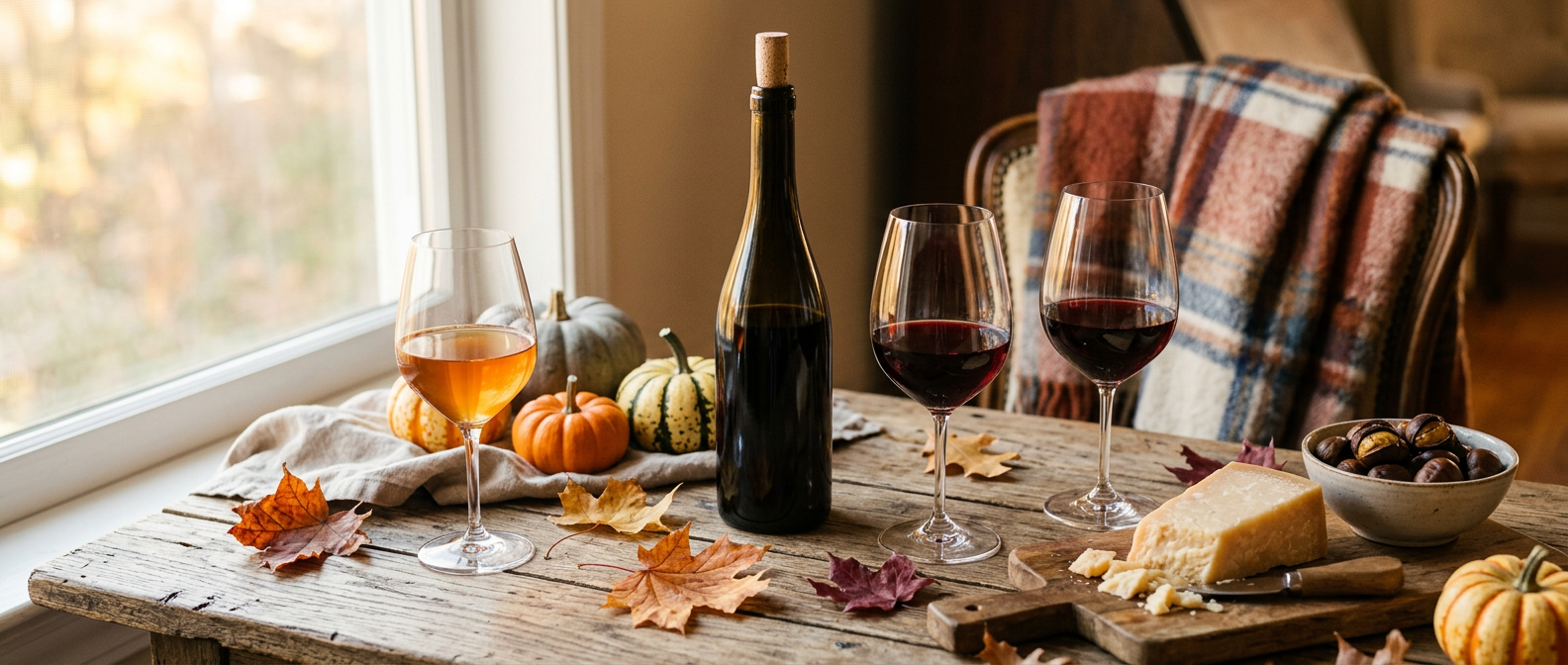
Swap the Pumpkin Spice Latte for These Autumn Wines
The PSL is back on every coffee counter in Ireland, and it's easy to see why. Cinnamon, clove, nutmeg, a bit of sweetness, something warm to hold as the evenings close in. What most people don't realise is that a lot of wine already tastes like that, with no syrup involved.
Those autumn spice flavours come from grape varieties, the way wine is aged, and the barrels it rests in. Once you know where they come from, you can pick a bottle that does everything the latte does, and pairs with dinner too.
Where the spice in wine actually comes from
The barrel
Oak barrels are the biggest source. When wine sits in oak, it picks up compounds from the wood. Vanillin gives vanilla. Eugenol is the same compound that gives cloves their flavour. Toasting the inside of the barrel, which winemakers do over open flame, adds notes of caramel, coffee and baking spice. American oak tends to give sweeter vanilla and coconut, while French oak is more subtle, with cedar and fine spice.
Some grapes carry spice naturally. Syrah contains rotundone, the same aromatic compound found in black peppercorns. It's why a cool-climate Syrah can smell like someone has just used the pepper grinder.
Rotundone: the black pepper compound hiding in your glass of Syrah.
Age brings its own flavours. As wine matures, fresh fruit gives way to dried fruit, nuts, toffee and leather. Wines aged deliberately in contact with air, like tawny port, lean fully into caramel, walnut and orange peel.
So when you want a wine that tastes like autumn, you're looking for one or more of those three things.
Oak
Grape
Age
01
If you love the cinnamon and clove
Rioja Reserva
Rioja is the closest match to the PSL. Traditional producers age their Tempranillo for long periods in oak, often American, and the result is soft red fruit wrapped in vanilla, sweet spice and a little leather. A Reserva spends at least a year in barrel and several years ageing in total before release, so it's smooth and ready to drink.
Pair it with
Try it with a slow-cooked beef and Guinness stew or a Sunday roast of lamb.
Southern Rhône reds are mostly Grenache, often blended with Syrah and Mourvèdre. Expect ripe strawberry and plum, with dried herbs and a peppery lift. The spice here comes from the grapes, not the barrel, so it's drier and more savoury than Rioja. Good value, easy company, and flexible with food.
Grenache
Syrah
Mourvèdre
Pair it with
Try it with sausages and mash, a shepherd's pie, or anything with rosemary and thyme.
Pumpkin soup, roast squash and butternut risotto need a wine with some weight. Viognier, from the northern Rhône and now grown widely in the south of France, has apricot, peach and a round, almost oily texture that sits well with sweet orange vegetables.
Orange wine is worth a look too. These are white grapes made like red wine, with the juice left in contact with the skins. That gives amber colour, a bit of grip and flavours of dried apricot, tea and orange peel. It sounds unusual, but it's one of the oldest ways of making wine, going back thousands of years in Georgia. Many of the small, minimal-intervention growers we work with make one, and they come alive next to autumn cooking.
For after dinner, tawny port is the wine that tastes most like a dessert latte. Years in wooden casks give it walnut, caramel, fig and orange peel.
Serve it
Serve it slightly chilled.
Pair it with
It's excellent with a slice of barmbrack at Halloween.
Sweet white Bordeaux
Sweet white Bordeaux, from Sauternes and neighbouring appellations like Cadillac and Loupiac, is the other route. The grapes are affected by noble rot, a fungus that concentrates sugar and flavour, giving honey, candied orange and baked apple. It's a family-estate wine at heart, and part of Bordeaux we've been visiting for decades. The Lapierre family at Château Haut Rian have been growing grapes on the right bank of the Garonne for generations, and the region's slower, fuller style suits the colder months.
Honey
Candied orange
Baked apple
Pair it with
Try it with apple crumble, blue cheese, or a pumpkin tart.
Not everyone wants a heavy red. Beaujolais, made from Gamay, is light, juicy and low in tannin, and it can be served slightly cool. The named villages, known as the crus (Morgon, Fleurie, Brouilly and others), have more depth than basic Beaujolais, with red cherry, a little spice and earthiness.
Morgon
Fleurie
Brouilly
Party tip
It's the wine to put on a table where people are grazing and chatting rather than sitting down to a meal.
For vanilla and baking spice, look for wines aged in oak, especially Rioja Reserva.
02
For pepper and savoury warmth, go to the Rhône.
03
For something to match pumpkin and squash, choose Viognier or an orange wine.
04
For caramel, nuts and dessert, it's tawny port or sweet Bordeaux.
05
For a crowd, go with Beaujolais.
One last thing on temperature
The PSL is served hot. Your red shouldn't be.
Irish homes in autumn get warm with the heating on, and a red that sits next to the radiator will taste flat and alcoholic. Twenty minutes in the fridge before opening brings it back to around 16°C, where the fruit and spice show properly.
20 min
In the fridge
16°C
To serve your red
What's your go-to wine once the clocks go back?
And if there's a flavour you love in your autumn coffee, tell us and we'll suggest a wine that matches it.
Talk to our team
Contact us
Tell us what you're cooking or what you love in your autumn coffee, and we'll find the bottle to match.