
Trade Insights · By the Glass
The Glass Is Now King: Getting More From Your By-the-Glass List
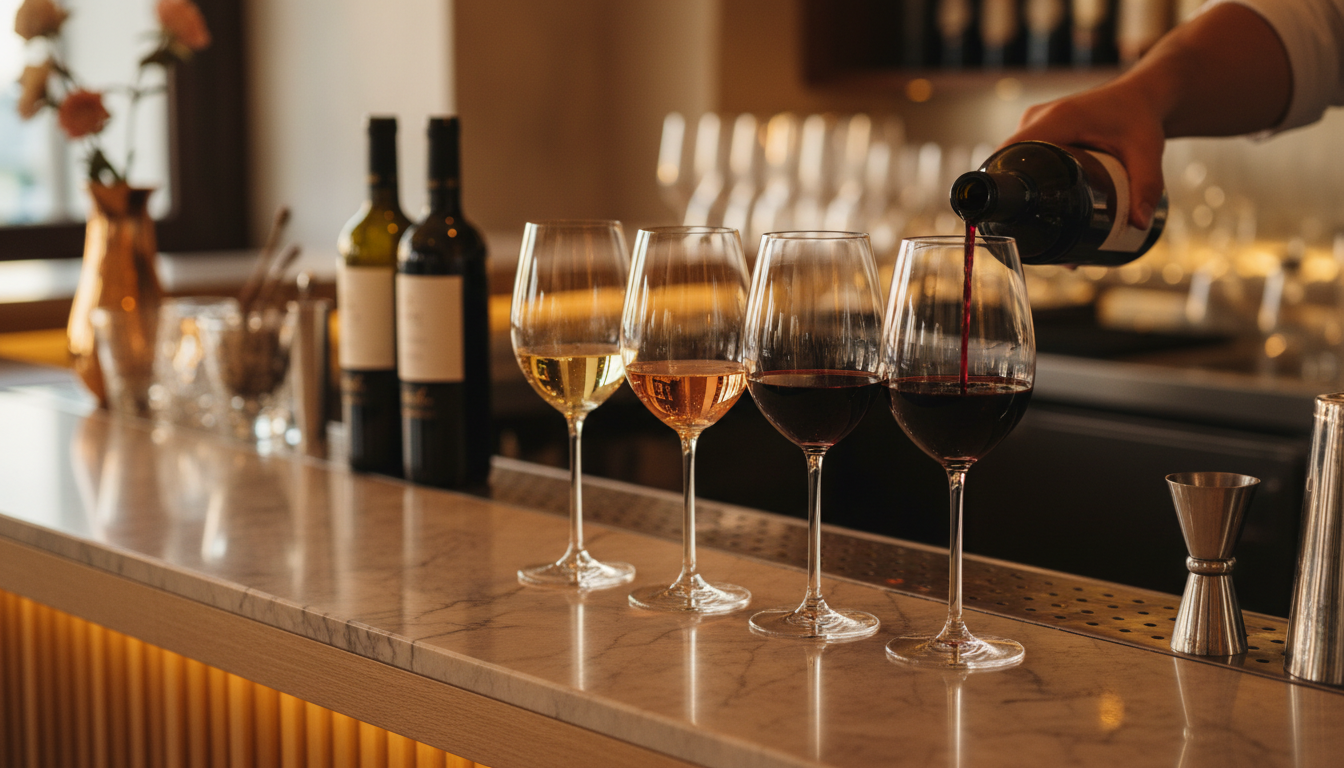
The bottle sale isn't what it was. Guests want to try more, match a different wine to each course, and drink less overall. A table of four rarely agrees on one bottle, but four glasses is an easy yes. For most restaurants, the by-the-glass list is now the most important part of the wine offer, and the part that most needs managing.
Why the glass has taken over
Several changes have landed at once. Tasting menus and pairings have trained guests to expect a wine with each course. Drivers, midweek diners and smaller tables all prefer a glass to a bottle. A glass is also a low-risk way to try something unfamiliar, which is where a good list earns its reputation.
A bottle asks the table to commit to one wine. A glass invites them to explore. Venues that build their list around that shift sell more wine, and better wine.
Rotate a seasonal glass
Keep a core of reliable pours, then rotate one or two slots in and out with the season or a producer. A game-friendly red in autumn, something with more structure in winter, bright whites in spring and rosé through the summer.
Rotation gives staff something new to talk about, gives regulars a reason to come back, and gives the kitchen a wine to match its seasonal dishes. The wine needs a story staff can tell in one sentence. Guests don't remember tasting notes; they remember the people who made the wine.
Remember, we split cases, so you don't have to commit to a full case of any wine you rotate in. You can run a seasonal glass for a month, move on to the next producer, and never be left with stock sitting in the cellar. It keeps the list fresh and cost effective, and means you can try something new without the risk.
This autumn's example: Ollier-Taillefer
For October and November, Domaine Ollier-Taillefer in Faugères, in the hills of the Languedoc, is a natural choice.
The estate is run by siblings Luc and Françoise Ollier, the fifth generation of their family to farm there, and Luc's son Florent joined them in 2020. Their vineyards around the village of Fos are the highest in the Faugères appellation. They rise to around 350 metres, on steep schist slopes surrounded by forest and wild hillside. Some of their Carignan was planted by their great-grandparents in 1910.
That wild setting has its own problems. As the grapes ripen, wild boar come down out of the forest to raid the vines, and the family has to shoot them to protect the harvest. The animals that attack the vineyard are exactly what the wine is made to go with.
That's the story for your staff, and it tells guests what to order alongside it. The altitude gives Ollier-Taillefer's reds dark fruit, spice and a savoury, herbal edge, with more freshness and lower alcohol than many southern French reds. With venison, wild boar, duck or pheasant on the menu, it's an easy recommendation.
Choose the right measure for your venue
There's no single correct glass size. The right measures depend on how your guests eat and drink:
- Tasting pours (75–100ml) for pairing menus, where guests have a wine with each course.
- Smaller glasses (125ml) for guests who want to explore two or three wines across a meal.
- Standard glasses (150–175ml) for à la carte dining.
- Carafes (250–500ml) for tables that want to share without committing to a full bottle.
Whatever you choose, state the measure clearly on the list. Guests notice a short pour, and a stated measure builds trust.
Preserve every open bottle
Once the glass is your main sale, a preservation system is essential. It protects margin on every bottle and lets you pour wines by the glass that would otherwise only sell by the bottle, including the premium wines that set a list apart.
The right system depends on your volume, the wines you pour and the space behind the bar. Ask us or your rep about the best way to preserve wines in your venue.
Good habits still matter alongside the system: date every open bottle, refrigerate open reds overnight, pour the oldest open bottle first, and taste at the start of each shift.
Train the team on the glass list
A glass list only works if the floor team sells it. A few minutes before service makes the difference:
- Taste every open wine at the start of the shift.
- Give each wine one line: who made it, where, and which dish it suits tonight.
- Offer a taste of the seasonal glass when a guest hesitates.
A guest who has tasted a wine and heard its story will usually order it.
Over to you
How has the balance between bottle and glass changed in your venue? Send us your questions and we'll answer them in a future post. If you'd like to run Ollier-Taillefer as your autumn glass, our wholesale team can bring a bottle in for your staff to taste.