
Decanting Wine: When It Matters, When It Doesn't, and Why Your Grandmother's Crystal Jug Was Doing More Than Looking Pretty
Gav & Gareth Keogh, Wine Brothers | Wines Direct
You've seen it in restaurants. You've seen it in films. Someone pours a bottle of red into a fancy glass vessel, swirls it around, and suddenly the wine is "ready."
But what's actually happening in that decanter? And more importantly — do you actually need one at home?
Let's break it down. No nonsense. Just the facts behind one of wine's oldest rituals.
What Is Decanting, Really?
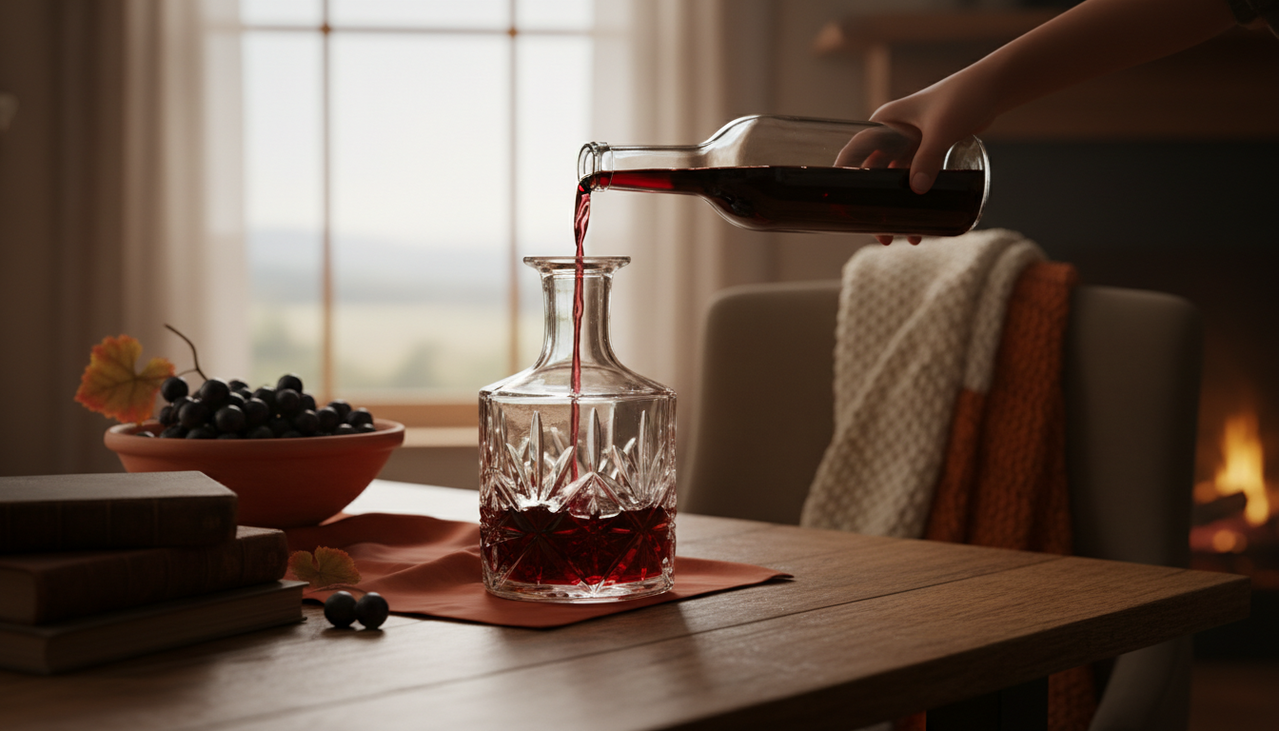
At its simplest, decanting means pouring wine from its bottle into another vessel before serving.
Two things happen when you do this:
Aeration. The wine meets oxygen. This softens firm tannins and lets aromas open up — flavours that were locked tight in the bottle start to unfold.
Separation. Older wines throw sediment — tiny particles of tannin and colour pigment that settle at the bottom over years. Decanting lets you pour the clean wine off, leaving the gritty bits behind.
That's it. No magic. Just chemistry and gravity doing their thing.
A Quick Trip Through History
Decanting didn't start with wine snobs in country houses. It started out of pure necessity.
Ancient Rome (circa 1st century BC): The Romans stored wine in clay amphorae. When it was time to serve, they poured it into glass or bronze vessels — not for show, but because drinking straight from a dusty clay pot wasn't exactly elegant. These were the first decanters, though nobody called them that. The word "decant" actually comes from the Medieval Latin decanthare — "to pour from the edge of a vessel."
Venice (15th–17th century): Venetian glassmakers on the island of Murano revolutionised the game. They developed cristallo glass — clear, elegant, and suddenly you could actually see the wine you were about to drink. The decanter became a centrepiece. These Murano pieces are considered the earliest purpose-built wine decanters.
Georgian England (1700s): Lead crystal arrived. Decanters became status symbols — wide bases, long necks, decorative stoppers. Every well-set table had one. This is where the classic decanter shape we know today was born.
The practical reason persisted through all of this. Wine was unfiltered. Bottles were sealed with cork and wax. Sediment was a given. You had to decant if you didn't want a mouthful of sludge.
Today, most wines are filtered before bottling. So the sediment problem has largely gone away — but the benefits of aeration haven't.
When Decanting Genuinely Helps
Not every wine needs decanting. But some absolutely come alive with 20 minutes to an hour of air. Here's when to reach for the decanter:
Young, bold reds with firm tannins. Think Cabernet Sauvignon, Barolo, young Syrah, or a structured Malbec. These wines are built to age, and their tannins can feel tight and grippy straight from the bottle. Decanting for 30–60 minutes softens those edges and lets fruit and spice come forward.
Many of our winemakers — families who've been crafting wines for generations — build their reds with structure and intention. A young Rhône red from one of our producers, for example, can taste completely different after an hour in a decanter. The winemaker designed it that way. They know it needs air.
Older reds (10+ years) with sediment. This is the original reason for decanting. Stand the bottle upright for 24 hours before opening, then pour slowly into the decanter, stopping when you see sediment reaching the neck. A candle or phone torch underneath the bottle neck helps you spot it. Be gentle — this isn't a wine that wants vigorous splashing.
Natural and minimal-intervention wines. Some natural wines can be a bit "funky" on first pour — reductive notes, a whiff of something sulphurous. This often blows off with 15–20 minutes of air. The winemaker hasn't masked things with heavy fining or filtration, so the wine just needs a moment to wake up and show what it's really about.
Full-bodied whites — yes, really. An aged white Burgundy, a rich Chenin Blanc, or a skin-contact orange wine can benefit from decanting. It's less common, but if a white wine feels closed or muted, 15 minutes in a decanter can open it right up.
When You Can Skip It Entirely
Light, fresh, aromatic whites. Sauvignon Blanc, Albariño, Picpoul — these are all about crisp acidity and fresh aromatics. Decanting warms them up and lets those delicate scents dissipate. Just open, pour, and enjoy.
Sparkling wine. You've spent years building those bubbles through secondary fermentation. Pouring into a wide decanter lets them escape. Unless you specifically want a flat Champagne (some people do — it's called decanting "still Champagne" and it's a deliberate choice), keep it in the bottle.
Light-bodied, delicate reds. A young Beaujolais, a fresh Pinot Noir, a chilled Gamay — these are made to drink now, as they are. Decanting can actually strip out the subtle aromatics that make them special.
Very old, fragile wines (20+ years). This might seem counterintuitive, but very old wines can fall apart with too much oxygen. They've been developing in a near-sealed environment for decades. Aggressive decanting can cause them to oxidise rapidly — you pour a beautiful 1990 Bordeaux, go check the pasta, come back and the wine has gone flat and lifeless. If you decant a very old wine, do it gently and drink it within 15–20 minutes.
The "No Decanter? No Problem" Move
Here's what the winemakers we work with actually do at home (and what we do too): just pour the wine into your glass and give it time.
A wine glass is a mini decanter. The bowl's shape is designed for exactly this — to let wine breathe. Pour, swirl, wait 10 minutes, and taste again. You'll notice the difference.
Some people double-decant: pour the wine into a decanter, rinse the bottle, pour it back. Same effect, less washing up, and the bottle stays on the table where it belongs — label facing out so everyone can see who made it.
Did You Know?
"The Ancient Romans used snow to chill their decanters." They'd pack vessels in snow brought down from the mountains to serve wine cold at banquets. Temperature control — two thousand years before wine fridges.
"Venetian glass decanters were so prized that Murano glassmakers were forbidden from leaving the island." The penalty for sharing their craft secrets? Death. Your kitchen decanter has a dramatic backstory.
"A study by the University of California, Davis found that decanting wine for just 20 minutes significantly reduced perceived bitterness in young red wines, while increasing the perception of fruitiness. It's not just tradition — there's hard science behind it.
"Port wine drove the design of the modern decanter." Because Port throws heavy sediment, Portuguese and English merchants in the 1700s needed wide-bottomed decanters that maximised surface area for separation. That classic ship's decanter shape? Designed for port on rocky seas — the wide base stopped it sliding off the table.
"In blind tastings, decanted wines consistently score higher than the same wine poured straight from the bottle." Same wine, same vintage, same glass — but 30 minutes of air changes the perception enough to shift scores.
"Hyperdecanting is a real thing." Modernist cuisine pioneer Nathan Myhrvold advocated throwing wine in a blender for 30 seconds to aerate it instantly. Does it work? Technically, yes — it rapidly introduces oxygen. Does it look ridiculous? Also yes. We'll stick with the traditional approach.
Our Take
We're not going to tell you that you need an expensive crystal decanter. A clean glass jug works just as well — the wine doesn't care what it's poured into.
What matters is understanding why you're doing it. If you've picked up a bold, structured red — the kind made by a family who's been tending the same vines for three generations — give it the air it was built to breathe in. It's the last step the winemaker can't do for you.
And if you're pouring a fresh, lively white on a summer evening out in the garden with friends? Just open it and pour. That wine is already exactly where it wants to be.
The best wine ritual isn't about having the right equipment. It's about slowing down, paying attention to what's in your glass, and sharing it with the people around your table.
What's your decanting habit? Do you always decant, never bother, or somewhere in between? Snap a photo of whatever you're drinking tonight and tag us @winesdirectirl on Instagram — we'd love to see it.
Gav & Gareth Keogh, Wine Brothers | Wines Direct