
Wine Tips & Serving
“Serve at Room Temperature”: Why the Old Advice Needs an Update
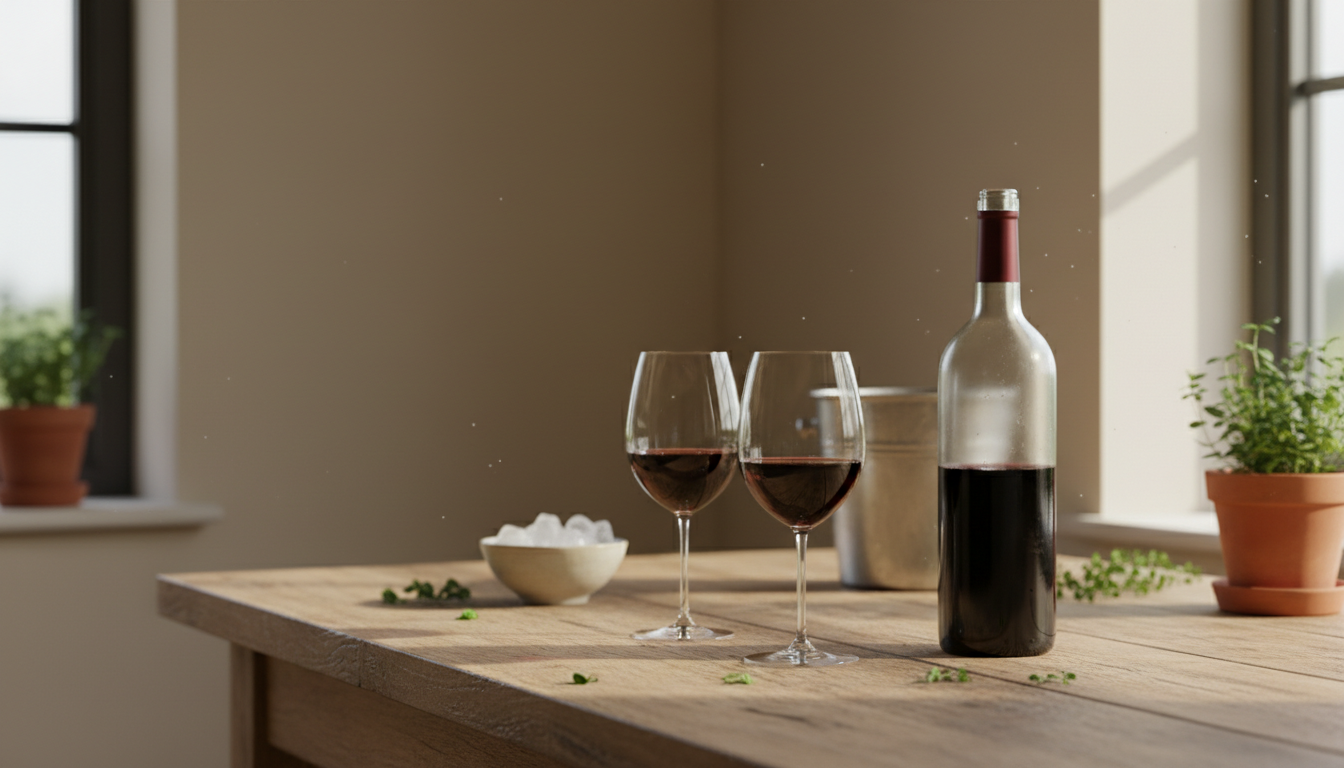
Most of us learned it at some point: white wine goes in the fridge and red wine sits out at room temperature. It’s one of the most repeated rules in wine, and in most Irish homes it’s quietly working against the bottle you’ve just opened.
The problem isn’t the advice. It’s the room.
Where “room temperature” came from
The phrase dates back to a time when houses were heated by open fires and a lot of goodwill. In the old stone houses of France, where the idea took hold, a room in winter might have sat at 15 or 16°C. That’s what “room temperature” meant: cool, a little draughty, and very good for red wine.
Irish homes have changed. Central heating, insulation and double glazing mean most living rooms now sit at 20 to 22°C, and a kitchen with the oven on can go higher. A bottle of red left on the counter next to the cooker, or in a wine rack beside the radiator, can easily reach 23 or 24°C by the time it’s poured.
At that temperature the wine doesn’t taste as it should.
What temperature actually does to wine
Temperature changes how we perceive almost everything in the glass.
Too warm
The alcohol comes forward. You get a hot, slightly spirity sensation at the back of the throat, and the fruit starts to taste stewed or jammy rather than fresh. The wine can feel heavy and flat, as if someone turned the lights down on it.
Too cold
The aromas close up. A cold white can taste of very little, and a cold red becomes hard work: the tannins feel grippy and the bitterness is exaggerated, while the fruit disappears.
The sweet spot sits between the two. That’s where the wine the winemaker intended actually shows up.
A practical guide to serving temperatures
You don’t need a thermometer. These ranges are a guide, not a test:
| Style | Serve at | Example |
|---|---|---|
| Sparkling wineChampagne, Crémant, Prosecco | 6–10°C | Champagne, Crémant, Prosecco |
| Light, crisp whites and roséSauvignon Blanc, Albariño, Provence rosé | 7–10°C | Sauvignon Blanc, Albariño, Provence rosé |
| Fuller, richer whitesOaked Chardonnay, white Burgundy, Viognier | 10–13°C | Oaked Chardonnay, white Burgundy, Viognier |
| Light redsBeaujolais, Pinot Noir, Loire reds | 12–14°C | Beaujolais, Pinot Noir, Loire reds |
| Medium to full redsBordeaux, Rioja, Rhône, Malbec | 15–18°C | Bordeaux, Rioja, Rhône, Malbec |
| Sweet winesSauternes, late-harvest Riesling | 6–10°C | Sauternes, late-harvest Riesling |
4°C
Domestic fridge
20°C+
Heated Irish room
For reference, a domestic fridge runs at around 4°C, and a centrally heated Irish room runs at 20°C or more. Nearly every wine on that list belongs somewhere in between.
The 20-minute rule
The simplest fix works both ways.
Reds
Put them in the fridge for about 20 minutes before opening. It won’t make them cold, just bring them back down to the cellar-cool temperature they were made for. Lighter reds like Beaujolais or Pinot Noir can take a little longer.
Whites
Take them out of the fridge about 20 minutes before you pour. Straight from the fridge, most whites are too cold to show their character, especially fuller styles like Chardonnay.
If you forget, don’t worry. Pour a red into the glass and it will warm quickly in your hand. A white that’s too cold will open up over the first ten minutes as it sits.
A few more things worth knowing
-
Ice buckets work better with water.
Ice alone only touches the bottle in a few spots. Fill the bucket half with ice and half with cold water, and a bottle of white or sparkling will chill in around 15 minutes, far faster than the fridge.
-
The freezer is a gamble.
It works in a pinch, but set a timer. Twenty to thirty minutes is plenty, and a forgotten bottle can push the cork out or crack the glass.
-
Wine warms up in the glass.
It’s better to serve slightly too cool than slightly too warm. A wine will gain a degree or two within minutes of pouring, while there’s no easy way to bring a warm glass back down.
-
Store it somewhere cool, not just somewhere convenient.
The top of the fridge, the shelf above the cooker and the rack beside the radiator are the most popular spots in Irish kitchens for keeping wine, and all three are among the worst. A cupboard on an internal wall, under the stairs, or a cool utility room will do a far better job.
Why it matters to the people who made it
12–14°C
The cellar, all year round
Most winemakers taste their wines in the cellar, where the temperature sits steady at around 12 to 14°C, year round. That’s the environment their wines grow up in, and it’s the conditions they’re thinking of when they decide when to pick, how long to age and when the wine is ready to bottle.
When we taste with the producers we work with, it’s rarely at anything you’d call room temperature. A glass of red poured a few degrees cooler than most of us are used to is often the first thing people notice, and usually the thing they remember.
Getting the temperature right is one of the easiest ways to meet a wine the way its maker intended.
No special equipment, no extra cost, just a little more attention to where the bottle has been sitting.
Questions we get asked
Is it bad to chill red wine?
Not at all. Lighter reds in particular are often better slightly chilled, and many are served that way in the regions they come from. It’s only when a red gets properly fridge-cold that the tannins start to dominate.
Can I put wine back in the fridge after it’s warmed up?
Yes. Temperature changes won’t harm a bottle over a single evening. It’s repeated long-term swings in storage that cause problems.
Does temperature matter for cheaper wine?
Arguably more. A well-made everyday wine served at the right temperature will taste fresher and more balanced, while serving it too warm tends to bring any rough edges forward.
Do you keep your reds in the kitchen or somewhere cooler? And have you ever tried chilling a red?
Let us know what you found.
Get in touch
Questions about a bottle, an order or what to serve this weekend? Our team is happy to help.